A Storyteller In Zion, Orson Scott Card
This is a collection of essay's from quite a varied amount of sources compiled and edited by OSC and distributed by Bookcraft (anybody remember them?) I liked the

whole thing overall, it is packed with great perspectives for writers. The interesting aspect is---I have to admit to not being a terribly big fan of OSC. I truly never cared for Enders Game and couldn't bring myself to read the sequels. I liked his Folk of the Fringe and Alvin Maker series much better but still thought it moved a little too slow or made villains out of really cool guys like Jim Bowie, and Jim Bowie rocks! The piece here that grabbed me the best and has honestly influenced me to the point of writing a novel was the first essay taken from a speech given at BYU in 93 for Life,The Universe and Everything titled "The Book of Mormon-Artifact or Artifice". It is a pretty good run down on how Joseph Smith could not possibly have had the info to write a book covering things from the ancient world so accurately, contrary to what people like Tal Bachman think Joseph could not have been just a great storyteller and been this lucky with things. My one beef with the essay which I addressed recently in the comments at Banner, Sword and Shield was Were the Mulekites really from Jerusalem. Card asserts that King Zarahemla may have tried to BS Mosiah that "Hey were from Jerusalem too and yeah, were descended from

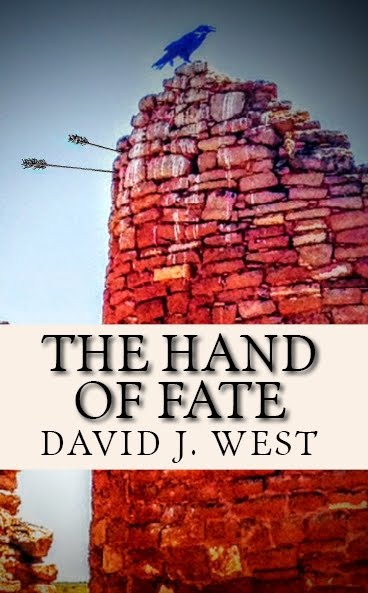
your last king so we ought to be in charge of you" No dice, I think Card is dead wrong. King Z gave in and Mosiah became king. My argument is based off what the Book of Mormon tells us between the lines, and I thank Hugh Nibley for starting the ball rolling with the assessment of the name Lachoneus the Governor from Nephi 3 being a GREEK name. It means man from Laconia or SPARTA. I looked the text over and the Book has numerous Greek names including Judea, Jonas, Jesus Christ, Timothy, Lachoneus and Archeantus and all the Anti-names, possibly Onidah and my personal theory of Manti being a contraction of Mantinea a Greek city. Thinking about all this I did a boatload of research and came to the conclusion that King Zedekiah of Jerusalem had Greek mercenaries serving him at the time of the Babylonian invasion. I wrote a novel based upon a Spartan mercenary getting Mulek out of Jerusalem and to the Promised Land. That's a real quick rundown-I am blazing over so many details, but it explains why no Greek names are in the Book of Mormon before they meet the Mulekites or even the River Sidon named after a Phoenician city, because it was named by Mulekites not Nephites. Card has a lame excuse in my opinion and it has to assume that Mosiah is duped-at least in part. My explanation covers all the bases and doesn't require being an apologist which to me is a dirty word. I have thoroughly jacked the review of Card's book for discussing my own but it is because I read Card's essay a year and a half ago that inspired me to write "Bless The Child" Overall this was a great book for writing thoughts-that was just the piece that made me say I have to write this novel and give a fictional take on what I think actually did happen.
Night Winds, by Karl Edward Wagner

This is a favorite Sword and Sorcery writer of mine. This was a reread for me simply because I wanted to get back in touch with some of his wonderful prose. Wagner is a master at mood and setting. He has a brilliant way of giving you that resonance of ancient ruin and myth come alive. The main character in all the stories is Kane/Cain who makes for an incredibly interesting anti-hero which I don't usually like. In a less gifted writers hands I wouldn't care less but Wagner makes you interested in even such a villain and murderer. I wouldn't want to be pals with Kane but he does make for invigorating reading.
Moon of Skulls, by Robert E. Howard
This was another reread of mine by a favorite. I found this,(I have been looking for a copy for the last couple years and being such a used book hound never bothered

to order it online anyway) I found in a little used book shop next to the Pike Street Market in Seattle (where they throw fish) and was excited because it contained the last big REH story I had not read yet "Skullface" its about an ancient sorcerer attempting to unite a lot of the third world nations against western imperialism. It is probably one of the least PC stories Howard ever wrote but then it was written back in the 30's so I don't let any of that get in the way of a good tale-which it is. Along with a number of other short stories I love REH poems, this collection had over a half-dozen and they were all very good, if you like that hint of violent colorful (as in bloody and heroic) like I do.
Legend, by David Gemmell

Obviously I have been reading the more fantastical, sword and sorcery stuff lately and this one was new but no disappointment. Legend is grim fantasy grounded in familiar history, in many ways this could have been a tale about an eastern European fortress city defending itself against the Mongols. The magic is light, I like that, I like for magic to be grounded in a scientific way and have a cost for its use and not to be used as if its a blank check, that's the surest way for me to not care about a fantasy book. Gemmels other strength is he knows human nature and composes well written characters with believable dialogue and intelligent insight. I especially liked the lead character Druss an aged warrior fighting his last, but all the secondary characters were worth rooting for as well both good and bad. I have only read a couple Gemmell books but I will be going back for more.
I have also recently reread A Moveable Feast, by Ernest Hemingway but I discussed that recently already. I have also been skimming a number of research books for the sake of my writing but that should be reserved for another time. I should be back on my usual schedule of reading soon.